Thursday, 16 May 2013

Oregano & Marjoram


Oregano is a hardy perennial herb, used in Mexican and Mediterranean cuisine. There are three species, O. vulgare- wild marjoram, O. majorana- sweet marjoram and O. omites- pot marjoram. Fresh oregano is so much nicer than dried, so it is well worth a place in the garden.

Oregano has few pests and diseases, and is drought tolerant once established. It grows best in well drained friable soil, and will tolerate poorer soil. It doesn't like boggy conditions. It can be container grown.

Oregano has been used in medicine, cookery & cosmetics for thousands of years, It has antiseptic, anti-inflammatory & antifungal properties.


Oregano Leaf

Marjoram: (Origanum majorana) Labiatae. Perennial
Oregano: (Origanum vulgare) Labiatae. Perennial
Propagation: seeds cuttings. In Spring.
Position: Sunny
Soil: Average, well-drained
Height: marjoram - 45cms oregano - 60cms
Part used: leaves
Oregano Flower


Description: 

These 2 plants are so closely related & their cultivation is so similar, that we can classify them together. In appearance though, they are slightly different. Marjoram leaves are small, soft & grey-green colour, while Oregano leaves are light green & much firmer. Their growing habits are different too. Marjoram is a compact, upright, shrubby plant, while oregano has a dense, spreading habit. The flowers of both are small & white and form tight clusters at the tips of the stems.
Oregano is basically a wild form of marjoram. Oregano is more robust, has a more pungent scent.


History:
Oregano was 1st grown in the Mediterranean regions & widely distributed to Asia & North Africa. It was used in houses to give a clean, pleasant smell, in linen closets.


Marjoram Flower


Cultivation:
Take cuttings in Spring, new shoots about 8cms long. Place cuttings in coarse river sand. When well-rooted, they can be planted in pots, leaving at least 30cms between the plants.
From seeds, sow in Spring, & plant out when seedlings are 8 cms high.
Both plants tend to get woody as they get older.  Try giving the old wood a trim at the end o Winter, early Spring to encourage new growth. After 4 years, you may need to replace the plant.


Harvesting & Processing:
The best time to harvest is before the plant is in full flower - summer or early Autumn. Cut the long stems, together with any flower heads, & hang them in bunches in a cool airy place. The leaves tend to fall as they dry. I like to wrap them in a paper bag, tie with elastic band, to catch the leaves. Oregano will stay fresh for months, & most of the times, the dry leaves have more scent dried than fresh. For freezing, chop leaves finely, mix with a little water & put them  in ice cube trays in the freezer. Bunches of Oregano may be wrapped in foil, sealed & kept in the freezer for weeks.
Marjoram bush
Or try this - chop the fresh leaves, pound them into softened butter, allow it to set in the fridge, then cut into squares , seal, & freeze.

Uses : 
Culinary: The Greeks call oregano/marjoram rigani, & usually the dried flower tops are used in cooking. Marjoram is usually found mixed with thyme , sage, & basil. On its own, it can be added to fish, egg dishes, vegetable dishes & sauces. Put it in salads, scones, dumplings & clear soups. 
Oregano is more pungent dried than fresh. It is used on pizzas, pasta & rice dishes, moussaka, avocado dips, tomato dishes, meat loaf, rissoles, sauces & dressings, with zucchini, capsicum & eggplant. It is often sprinkled on beef, lamb & pork.

Medicinal: The Greek doctors used Oregano, both internally & externally. It is supposed to help with colds, cramps & digestive disorders. A poultice made of the dried leaves & tops can help painful swellings, rheumatism & colic. A tea infusion can help relieve nervous headaches, induces sleep.

Cosmetic: Marjoram will darken hair. Tie sprigs , plop in a muslin bag & place in the bath. Dried leaves can be used in a sleep pillow blend or pot-pourri.

Companion Planting:
Marjoram & Oregano , due to their scent, are useful for all plants in your garden.. specially when the plants are in flower. They attract honey bees. It is said that marjoram fed to cows will prevent abortion. After calving, Marjoram mixed with balm & made into a tea is given to the cow to soothe & strengthen them. If Marjoram is placed next to stinging nettles, it will increase the amount of essential oil.


Mediterranean Lemon and Oregano Chicken

Ingredients

Serves: 6
  • 1 lemon
  • 2 teaspoons dried oregano
  • 3 cloves garlic, minced
  • 1 tablespoon olive oil
  • 1/4 teaspoon salt
  • 1/4 teaspoon ground black pepper
  • 6 chicken legs or breasts


Preparation method

Prep: 15 minutes | Cook: 50 minutes

Wednesday, 15 May 2013

Plant In A Cup

I am a firm believer that if it's got a hole in it, it can hold a plant. I love rummaging through op shops finding weird & wonderful containers that could possibly hold a cutting. My favourites are  baskets, & pretty cups. If you are like me, you have a huge array of pretty but chipped mugs. I also use old fry pans, boots, casserole dishes, teapots, froggy scourer holders, gumboots, boats (I have plans for a canoe garden if I can ever get it out of the dam where it was sunk). Old toilets are great for climbers. I do most of my propogating this way. 

plant in a cup
plant in a cup


The cups that I use haven't got drainage holes. If you are good with a ceramic drill, then go for it. I'm not so good, & crack them. I place any container without drainage holes under the verandah or sheltered from rain. This way, I control the amount of watering, not mother nature. If a plant has wet feet continually, it will die.


I rather liked this idea. I wanted to propagate lawn chamomile, which is fairly shallow rooted, so it went into the frypan. The old camping toaster has wonderful drainage.


I was sad to replace our old billy, which we had owned for 20 years. Now it's a lovely hanging container.


many baskets
a basket
The great thing about using baskets is that, when they get old, you can plant the whole thing in the garden, reducing transplant shock. They have excellent drainage, which suits succulents, specially in our wet environment. My rule of thumb is that when the basket starts to rot, the plant is ready to be transplanted.

an old vase


a terracotta dish


styrofoam 
This little beauty I found by the roadside, fallen off a truck, I'm assuming. After grumbling about the mess left by travellers in our beautiful bush area, I decided to recycle it. I punched drainage holes in every section, filled with good quality soil & worm castings. I then planted strawberries. Next year, I may try lettuce. Mint would be good too, as it wouldn't be able to take over your garden. Maybe raising seedlings too.


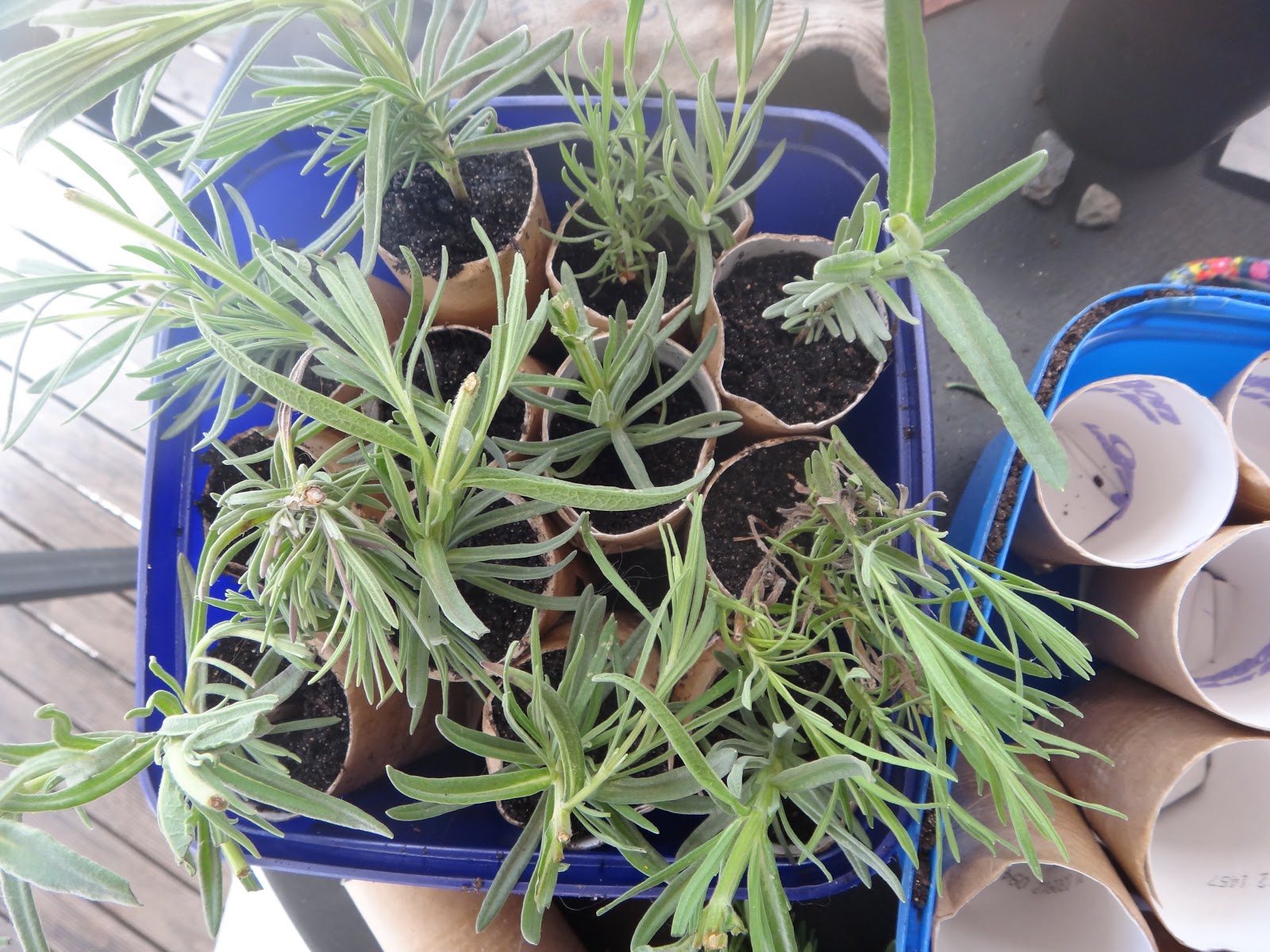
propogating in toilet rolls


I wanted a quick & easy way to propagate  rosemary & lavender plants for a hedge. I folded the bottom of the rolls, filled with good seedling mix, & placed the cuttings. When roots form, you can plant the whole thing, which reduces transplant shock to the roots.

an old teapot

Watering
I can't emphasise enough the importance of watering. On a hot, windy summer day and no water, your pot plants could become cactus. I do the finger test. All you need to do is rub your finger down into the potting mix and if it comes out with granules of potting mix stuck - that tells you that it's obviously moist enough. If, on the other hand, no granules stick to your finger, the soil is too dry. This can lead to the soil shrinking away from the edge of the pot and so whenever you're watering, instead of going into the depths of the rootball, it's actually just going down the side of the pot. If this has happened, you can dunk the whole pot in water to saturate the entire rootball. If your pot is too heavy to dunk, you'll need to use a wetting agent so that the water does penetrate into the rootball.
Ferstilising

It's important to fertilise your pot plants regularly and in small doses and like feeding plants in the ground, vary the fertilises. Slow release fertiliser will keep the nutrients up to your plant during the warmer months. In winter, animal manure will add organic matter to the potting mix and a liquid feed will give plants a bit of oomph any time of the year.


Thanks to this website for the  wonderful ideas below

 http://themicrogardener.com/clever-plant-container-ideas/


an old watering can


teapot

a childs toy wagon

Loved this one, a tonka truck.
school desk

a toolbox
an old sink

chest of drawers

a very inventive use of old drawers
even tin cans can be used

an old colander, again, use the coconut fibre at the bottom.

a very creative bath
personal favourite, the old loo

Old boots

The Bra planter, who wouldve thought of this?


Old Spice Rack


So there you go. Has this got your creative juices going? You will also be helping the earth by recycling stuff that would normally be thrown at the tip. If you are short of room in your garden, you can utilise the fences by hanging exciting & creative containers.

I hope you've enjoyed this fun Blog.
Happy Grubbing (& creating)
Tam


Tuesday, 7 May 2013

The Bee Friendly Garden


Australian Honey Bee
Honeybees collect pollen and nectar from plant flowers as their source of food. Not all plant flowers are equally liked by bees - bees prefer blue, purple and yellow flowers. In addition to nectar, bees are attracted to flowers with pollen.

Tassie Bumble Bee
Teddy Bear Bee
Metallic Carpenter Bee


When you want to attract bees to your backyard and also improve our bees' quality of life you can do that by planting a variety of plants bees just love to visit. Honeybees usually forage within a radius of three kilometres, so if you don't have any bees yourself, someone within a radius of 3km might have a hive or two, and then there are the feral bee colonies - all searching for flowers.

If you already have some bee-attracting plants and they are not visited by bees whilst flowering, then this should be a reason to be concerned - in a healthy and intact environment there are always bees.

To help you establish a backyard with bee-attracting plants I have listed a few below - and planting a variety of bee-attracting plants will draw the largest crowd.

In most cases space is limited and you cannot plant dozens of trees and bushes - that's why the list includes the small plants first.


A number of herbs and vegetables attract bees with their flowers apart from being useful in


 your kitchen. Every bee-attracting backyard should have a herbs and vegie patch.


Australian Native Bee

Cloak & Dagger Cuckoo Bee
Native Stingless Bee
Blue Banded Native Bee


Annuals

Allysum
Asters
Calliopsis
Clover
Forget Me Nots
Marigolds
Nasturtiums
Poppies
Sunflowers
Zinnias
Perennials
Buttercups
Clematis
Cosmos
Crocuses
Dahlias
Echinacea
English Ivy
Foxglove
Geraniums
Germander
Globe Thistle
Hollyhocks
Hyacinth
Rock Cress
Roses
Sedum
Snowdrops
Squills
Tansy
Yellow Hyssop
Fruits & Veggies
Blackberries
Cantaloupe
Cucumbers
Fruit Trees
Peppers
Pumpkins
Raspberries
Squash
Strawberries
Watermelons
Wild Garlic
Zucchini
Herbs

Basil
Bee Balm
Bergamot
Borage
Catnip
Chives
Coriander
Fennel
Lambs Ear
Lavender
Mints
Oregano
Rosemary
Sage
Tansy
Thyme
Shrubs

Blueberry
Butterfly Bush
Button Bush
Honeysuckle
Indigo
Salvia
Privet
Trees

Alder
American Holly
Basswood
Black Gum
Black Locust
Bottle Brush
Buckeyes
Catalpa
Eastern Redbud
Grevillea
Golden Rain
Hawthorns
Hazels
Linden
Magnolia
Maples
Mountain Ash
Poplar
Sycamore
Tulip
Willows


Sunflowers
Calendula

Lavender

Borage


5 Steps To Attract Bees


Cut Back (or Out) Lawn Pesticides and Fertilizers
Many common lawn and garden chemicals are lethal to bees, while others may weaken their immune systems, allowing parasites, disease or other stresses to finish them off. Instead, switch to a strategy of integrated pest management or opt for natural, organic fertilizers and biological controls.


Cultivate Bee-Friendly Plants
Just as many plants need bees for pollination, bees need plants for nectar and pollen. Not anything green will do, however. In fact, bees tend to be attracted to blue, purple and yellow flowers. Consult with your local nursery to select appropriate varieties for your area
. Research shows gardens with 10 or more bee-friendly plants support the most visitors.

Let There Be Weeds
Many common weeds, such as dandelions and clover, are popular with bees. Go ahead and let some flower, then to keep things tidy, pull them up after they've gone to seed.


Avoid Mulch Madness
Many native bees tunnel and live in the soil, but can be blocked by heavy layers of woodchips or plastic liners. Learn to edge your lawn tastefully without completely shutting out bees.


Help Your Town Protect Bee Habitat
Some of the biggest threats to bees are urban sprawl and intensive land management. But you can reduce this trend by volunteering to plant wildflowers and other native vegetation along roadways and other common areas, and advocating for smart growth and sensible limits to development where you live.

Dangerous mite threatens billion-dollar bees


Bees are worth billions of dollars to the Australian economy.
There are fears that Australia's bees, which help pollinate up to $4 billion worth of crops each year, may be at risk of exposure to a dangerous mite that could devastate the fruit and vegetable industries.
Australia is the only remaining honey-producing country in the world not exposed to the varroa mite which wipes out 20 to 30 per cent of the bee populations it encounters.
Across the world apiarists have thrown everything at the mite, but all in vain. It is feared it will inevitably enter Australia, with the weakest spots being ports in north Queensland.
If the mite enters Australia it could infest all eastern states within five years.
Australian Honey Bee Industry Council spokesman Trevor Weatherhead says bees are incredibly important to a number of agricultural industries.
"Canola and sunflower - for the seed production of that - they need bees for pollinating," he said."And then you've got all your cucurbit family, the watermelons, pumpkins, rockmelons, honeydews. Again they need honey bees for pollination and if you don't have bees you don't get a crop."
Mr Weatherhead says the import danger zone is north Queensland.
"Just as a reminder that we have that threat from the north all the time and we need our quarantine people to be very watchful," he said.
"We've had cane toads, we've had rabbits in Australia, and this certainly will have a bigger impact on the economy than cane toads and rabbits will - that's for sure."

Danger zones

Queensland is the front line of the bee threat. Last month, quarantine workers found a swarm of 250 Asian honey bees on a ship at the Port of Townsville. The bees were identified via video-link in Brisbane. Queensland quarantine workers then hit the streets near the port searching for more bees.

Local residents were given containers to trap any bees they saw and given details of a hotline to call.
Liberal Senator Ian Macdonald says three weeks after one bee was found, he is still waiting for authorities to deal with the issue.
He also says Biosecurity Queensland has recently cut jobs.
"Twenty vets have been dismissed in January and February and I'm concerned that Queensland is at risk because the Queensland Government doesn't have sufficient personnel to do what they need to do," he said.
Biosecurity Queensland has informed the ABC that the bee is a common European bee and not an Asian Honey Bee.
The department is currently investigating the response time, and says it has changed hotline procedures so it won't happen again.

Significant 

The department responsible says two vets are among 21 Biosecurity Queensland staff who are taking voluntary redundancies.

They will be replaced, but it is unclear when.
Workers on Thursday went to the Townsville house where the bee was found after PM asked the department about the lack of response.
It said the case was the only one not dealt with from 371 hotline calls in the past three months.
Senator Macdonald says the job cuts are significant.
"A lot of this information is coming from within the department itself, from people who are very concerned at the cutback in biosecurity staff," he said.
Asian honey bees were found to the north in Cairns a few years ago.
They did not have varroa mites and authorities have given up trying to eradicate the pests in favour of trying to contain them.


PS, its now the next day after posting this Blog. Staggering home from work last night, I just happened to catch the late episode of the 7 pm Report on Ch 10. I was very excited to see them do a section on the grave situation of bees. Huzzah I thought, something worthwhile, rather than celebrity news & other rubbish. I am still steaming after watching with my mouth open, aghast.
Yes, the world has a real problem with bees, including the dreaded hive collapse. But then they went on to say that scientists have no idea why! Pesticides maybe, not sure, it's a real puzzle, they reported. Not one mention of the deadly varroa mite, or Asian bees, or the over use of insecticides & pesticides. Or the fact that suburban bee hives are being set up, by amateurs, with no idea of the continuing needs of the bees ie: enough plants & flowers around to feed them, keeping them disease free. Rooftop hives are becoming very popular, however, it is very unnatural for bees to fly up & up & up , expending vast amounts of energy, to reach these hives. 
There are MANY reasons why our bees are dying. But the 7PM Report did not report any of them. Sloppy reporting at its worst.

Happy Grubbing
Tam